Cities in Japan
Yokohama: Guide to Japan's Port City
This guide contains affiliate links. If you book through them we earn a small commission, at no extra cost to you. Affiliate Disclosure
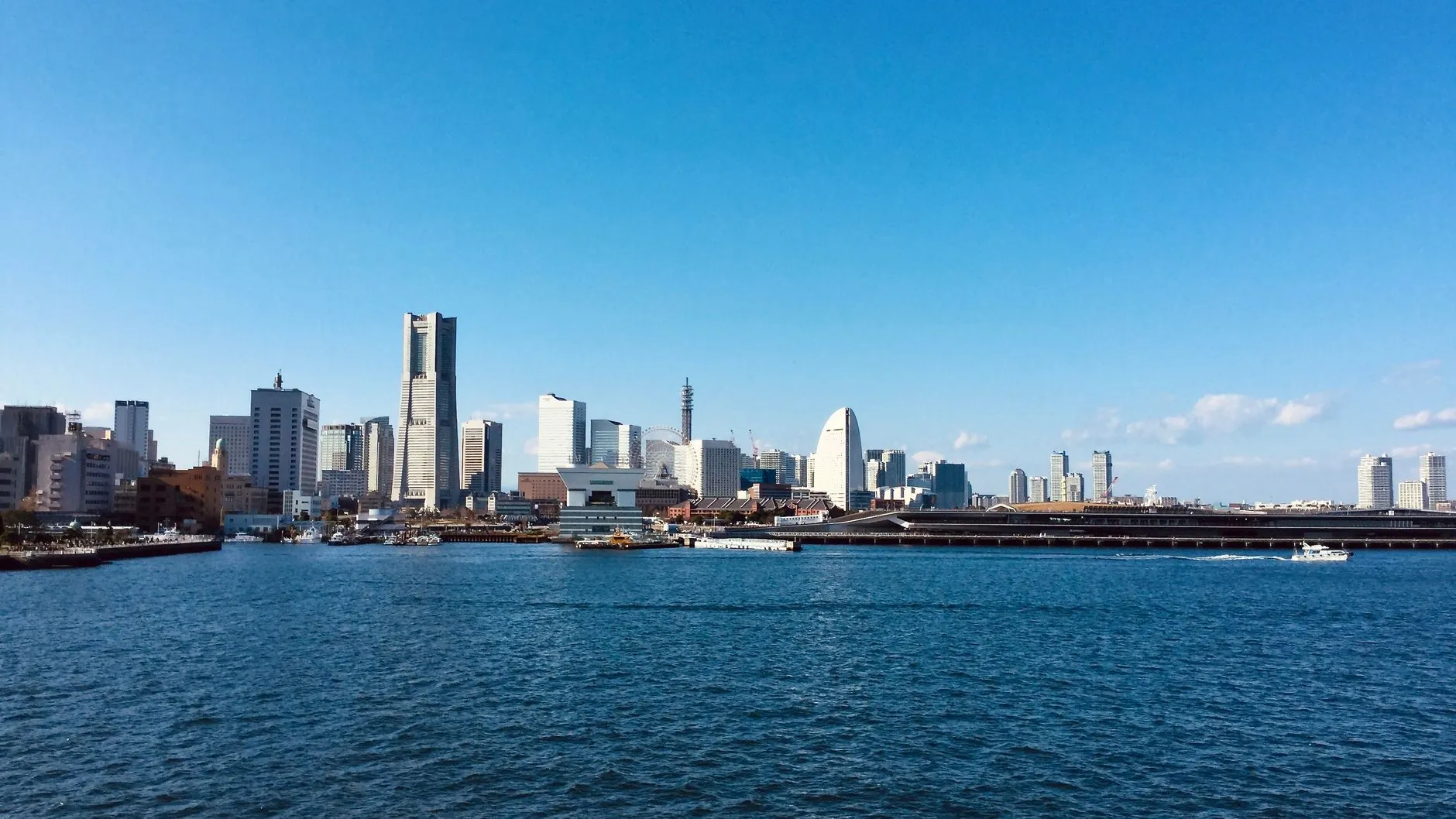
Yokohama, Japan’s second largest city, sits on Tokyo Bay just 30 minutes south of the capital — and yet it feels entirely different. Where Tokyo pushes from every direction, Yokohama offers a sea breeze, a sparkling skyline above the water, and the atmosphere of a port city that once opened its gates to the world.
Anyone arriving expecting “a smaller Tokyo” will find something else: Japan’s largest Chinatown, neighbourhoods with more European sensibility than Japanese, and tidy waterfront parks that invite you to walk at your own pace. You can finish a full day in Yokohama with a smile — without running anywhere.
Getting here from Tokyo
The journey is straightforward: a fast train from Tokyo, Shinagawa, or Shinjuku station to Yokohama Station takes about 20–30 minutes, depending on the line. It is cheap too — about ¥480 on the JR Tokaido Line from Shinagawa, and about ¥280 on the Tokyu Toyoko Line from Shibuya. Your Suica or Pasmo card works directly on both — no need to buy a separate ticket. Inside Yokohama, the Minato Mirai Line connects the main station to the Minato Mirai district and other waterfront stops.
Minato Mirai — the modern heart of the port
The Minato Mirai district is Yokohama’s new face: skyscrapers, shopping malls (including Landmark Plaza and Queens Square), the giant Cosmo Clock 21 Ferris wheel, and a marina on the waterfront. But what makes the visit worthwhile is walking outside the malls — along the quayside, with the Landmark Tower behind you and the bay in front.
In the evening, when the lights come on, the Minato Mirai skyline is one of the most beautiful in Japan. Hotels in the Minato Mirai area put you within walking distance of the harbour and skyline views.
Chinatown — hours of tasting
Yokohama’s Chinatown (Chukagai / 中華街) is Japan’s largest — streets draped in red paper lanterns, hundreds of restaurants and stalls, the smell of steaming dumplings and fried gyoza. One of a kind. The ideal approach: walk in through one gate and don’t over-plan — just taste. Steamed buns with fillings, gyoza, noodles, and a parade of Chinese sweets — a full meal assembles itself in random bites from different stalls. If you would rather know which of the hundreds of stalls to stop at — Chinatown food tours take the guesswork out.
Yamashita Park and the waterfront
Yamashita Park is Yokohama’s open waterfront promenade — flat, pleasant, and facing directly onto the bay. Picnic, walk, watch the ships: this is the place to breathe after the Chinatown. The quayside is home to museum ships moored at Yamashita Park. From the park, a pleasant walking path runs along the water’s edge all the way to Minato Mirai — about an hour to an hour and a half with views throughout.
Motomachi neighbourhood
Motomachi, just next to Chinatown, grew up under the influence of Yokohama’s foreign merchant community. Its main street has character, independent shops, cafés and restaurants that feel nothing like a mall. In a city full of air-conditioned shopping centres, Motomachi feels like a different breath.
Sankeien Garden
For anyone with a full day, Sankeien Garden (三渓園) is a short bus ride further south and well worth it. A traditional Japanese garden created in the early 20th century, with historic buildings relocated from across Japan — pagodas, teahouses, ponds. Entry to Sankeien Garden. It is particularly beautiful during cherry blossom season and autumn foliage.
When to visit and where to stay
Spring and autumn are the most pleasant seasons for walking the waterfront and visiting Sankeien. Summer is hot and humid; winter is cool but the views remain impressive.
If you decide to stay overnight — hotels in central Yokohama keep you close to transport and the port districts. The range spans hostels, standard business hotels, and sea-view options.
Making the most of Yokohama
Half a day: Minato Mirai → Chinatown → Yamashita Park. Full day: Add Motomachi in the afternoon and Sankeien in the morning. With an overnight stay: A quiet evening on the promenade, a café with a sea view, and a second day for the garden and the neighbourhoods you missed.
Guided tours of Yokohama — including a Chinatown food tour, evening harbour cruise, and neighbourhood walks.
From here you can carry on: read the Japan overview guide for a tour of all the regions, browse the cities guide to explore more destinations, or head to the Tokyo guide for base-planning.
Frequently asked questions
How long should you spend in Yokohama?
Half a day covers Minato Mirai, the Chinatown, and Yamashita Park. A full day lets you add Motomachi and Sankeien Garden. An overnight stay is only worth it if you want a relaxed pace with sea views.
How do you get from Tokyo to Yokohama?
A fast train from Tokyo, Shinagawa, or Shinjuku station takes about 20–30 minutes depending on the line. Your Suica or Pasmo card works directly.
What is the most worth seeing in Yokohama?
Japan's largest Chinatown, Minato Mirai with the Landmark Tower, Yamashita Park on the waterfront, and Motomachi for its European-Japanese atmosphere.
Is Yokohama suitable as a day trip from Tokyo?
Absolutely. The distance is short and easy, and after the intensity of Tokyo, Yokohama offers more sea air and less pressure.
Related guides
Japan: The Complete Guide for First-Time Visitors
Everything you need to know before flying to Japan: visa, transport, money, food, accommodation, and itineraries — the opening guide to our Japan series.
Tokyo: A Complete Guide to Neighbourhoods and Attractions
Everything you need for a trip to Tokyo: the key neighbourhoods, must-see attractions, where to sleep, Japanese food, day trips to Hakone and Kamakura, and a 3-day itinerary.