Itineraries
Shinkansen — Guide to Japan's Bullet Train 2026
This guide contains affiliate links. If you book through them we earn a small commission, at no extra cost to you. Affiliate Disclosure
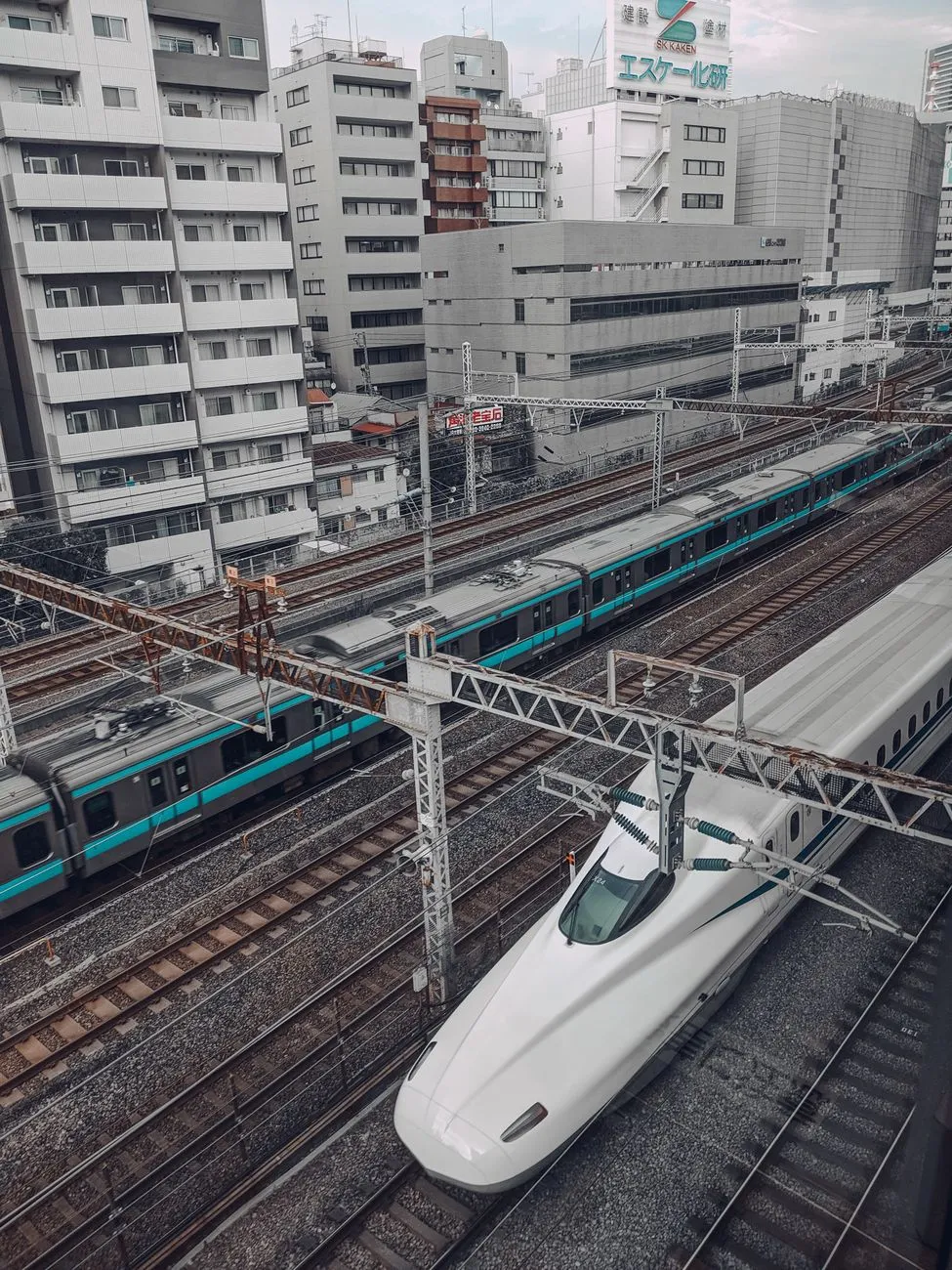
The shinkansen — Japan’s bullet train — is one of the country’s defining symbols. Since the first line opened in 1964 between Tokyo and Osaka, the network has expanded to thousands of kilometres and trains reach speeds of up to 320 km/h. The legendary punctuality — an average delay of less than one minute per year — and comfort make the shinkansen the best way to cross Japan. This guide covers the lines, train types, how to buy a ticket, and what to know before your first ride.
Golden Tip for First-Time Riders
Have a JR Pass? Reserve your seat at the counter in advance for peak-hour journeys and cherry-blossom season — it is free. No pass? The smartEX app lets you book shinkansen tickets in English and pay with a foreign credit card, with no queue — or buy a Japan Rail Pass if you are covering several long legs. Arrive at the platform ten minutes early — the train departs to the second.
The Main Lines
The most famous is the Tokaido Shinkansen, connecting Tokyo–Nagoya–Kyoto–Osaka, the busiest in the world. From there the Sanyo Shinkansen continues from Osaka to Hiroshima and Fukuoka. To the north the Tohoku Shinkansen fans out from Tokyo to Sendai and Aomori, branching off to the Hokuriku Shinkansen that reaches Kanazawa. In the south runs the Kyushu Shinkansen. Most classic tourist itineraries rely on the Tokaido and Sanyo lines.
Train Types — Nozomi, Hikari, Kodama
On the Tokaido line there are three tiers. Nozomi is the fastest and stops at only a few stations — Tokyo to Osaka in around 2.5 hours. Hikari stops at several more stations and takes 20–30 minutes longer. Kodama stops everywhere and is the slowest. A critical point for JR Pass holders: the pass is not valid on Nozomi or Mizuho without a surcharge, so plan around Hikari or Kodama, or pay the difference.
How to Buy a Ticket
There are several ways. At the green ticket machines (English available) at every major station. Via the smartEX app, which allows advance booking, seat selection, and payment with a foreign card. At the counter (Midori no Madoguchi) with a staff member. And JR Pass holders reserve seats free of charge at the counter or a dedicated machine. A shinkansen ticket has two parts: a base ticket and a speed surcharge — both go through the gate together.
Reserved vs. Non-Reserved Carriages
Most trains have reserved-seat carriages and non-reserved carriages. During peak hours, weekends, and holidays — reserve a seat, otherwise you will be standing. The non-reserved carriages (usually 1–3) are slightly cheaper but fill up. On Nozomi during peak seasons all carriages are sometimes reserved. With the JR Pass seat reservation is free, so there is no reason to skip it.
The On-Board Experience
The ride itself is part of the fun. Buy an ekiben (Japanese lunch box) at the station and eat while watching the scenery. There are power outlets, generous legroom, and clean toilets. Since 2020, a large suitcase (over 160 cm total of dimensions) requires advance booking of an oversized luggage space — free, but mandatory beforehand. Keep quiet: phone calls are made in the vestibules between carriages.
How Much Does a Shinkansen Journey Cost?
Prices depend on distance. A trip from Tokyo to Kyoto or Osaka costs about ¥14,000 (≈ $93) one way in ordinary class with a reserved seat. Tokyo to Hiroshima is around ¥19,000 (≈ $127), and Tokyo to Kanazawa around ¥14,000 (≈ $93). The Tohoku line from Tokyo to Sendai is around ¥11,000 (≈ $73). Green class adds around 30–50%. If you are planning two or more long journeys in a week, a quick calculation will show whether a JR Pass or regional pass will save you money. Children aged 6–11 pay half price; under 6 travel free without a seat.
How to Navigate the Station
Shinkansen stations are large but well signposted in English. Look for the orange shinkansen gates — separate from the regular train gates. On the platform, carriage-number markings on the floor show you exactly where to stand; the train stops precisely at your carriage. Departure boards show the next train, destination, and exact departure time. Board and alight quickly — stops are short, sometimes just one minute.
Green Class and Final Tips
Green class carriages (first class) offer wider seats, more quiet, and less crowding, at a noticeable premium. For most journeys ordinary class is perfectly comfortable. For guided tours along the way, check out activities in Japan. On a long itinerary, combine the shinkansen with a JR Pass and read the 7-day itinerary for full planning.
Shinkansen vs. Domestic Flights
For distant destinations like Tokyo–Fukuoka or Tokyo–Sapporo, a domestic flight may be faster and cheaper than the shinkansen. But for most classic routes — Tokyo–Kyoto–Osaka–Hiroshima — the shinkansen wins: no check-in, stations in city centres, and the view from the window is part of the experience. A rule of thumb: up to about 3 hours’ travel time the shinkansen beats flying; beyond that it is worth comparing.
In Summary
The shinkansen is not just a means of transport — it is an inseparable part of the experience of travelling Japan. Fast, clean, precise, and comfortable, it connects major cities with ease. Whether you choose a JR Pass, a regional pass, or a single ticket through smartEX — plan your long journeys in advance and enjoy the scenery, the ekiben, and the silence.
Return to the Japan travel guide for a full overview, browse itineraries for route planning, or read the JR Pass guide to decide on the right rail ticket.
Frequently asked questions
Is the shinkansen covered by the JR Pass?
Mostly yes, except Nozomi and Mizuho trains which require a surcharge.
Do you need to reserve a seat in advance?
Not mandatory in non-reserved carriages, but strongly recommended during busy seasons. With the JR Pass it is free.
Can you eat on the train?
Absolutely — ekiben lunch boxes and coffee are part of the experience. Just keep tidy and quiet.
Where should you sit to see Mt. Fuji?
On the Tokaido line from Tokyo to Osaka, sit on the right side (seats D and E), about 40 minutes after Tokyo.
Related guides
Japan: The Complete Guide for First-Time Visitors
Everything you need to know before flying to Japan: visa, transport, money, food, accommodation, and itineraries — the opening guide to our Japan series.
JR Pass 2026 — The Complete Guide: Is It Still Worth It?
Everything you need to know about the JR Pass in 2026: what it covers, the new October 2026 prices, value vs. regional passes, and how to buy and activate it. Full guide in English.
7-Day Japan Itinerary — Day-by-Day Plan
A detailed 7-day Japan itinerary: Tokyo, Kyoto, and Osaka day by day, including day trips, JR Pass, accommodation, and budget. The ideal first-timer's plan.