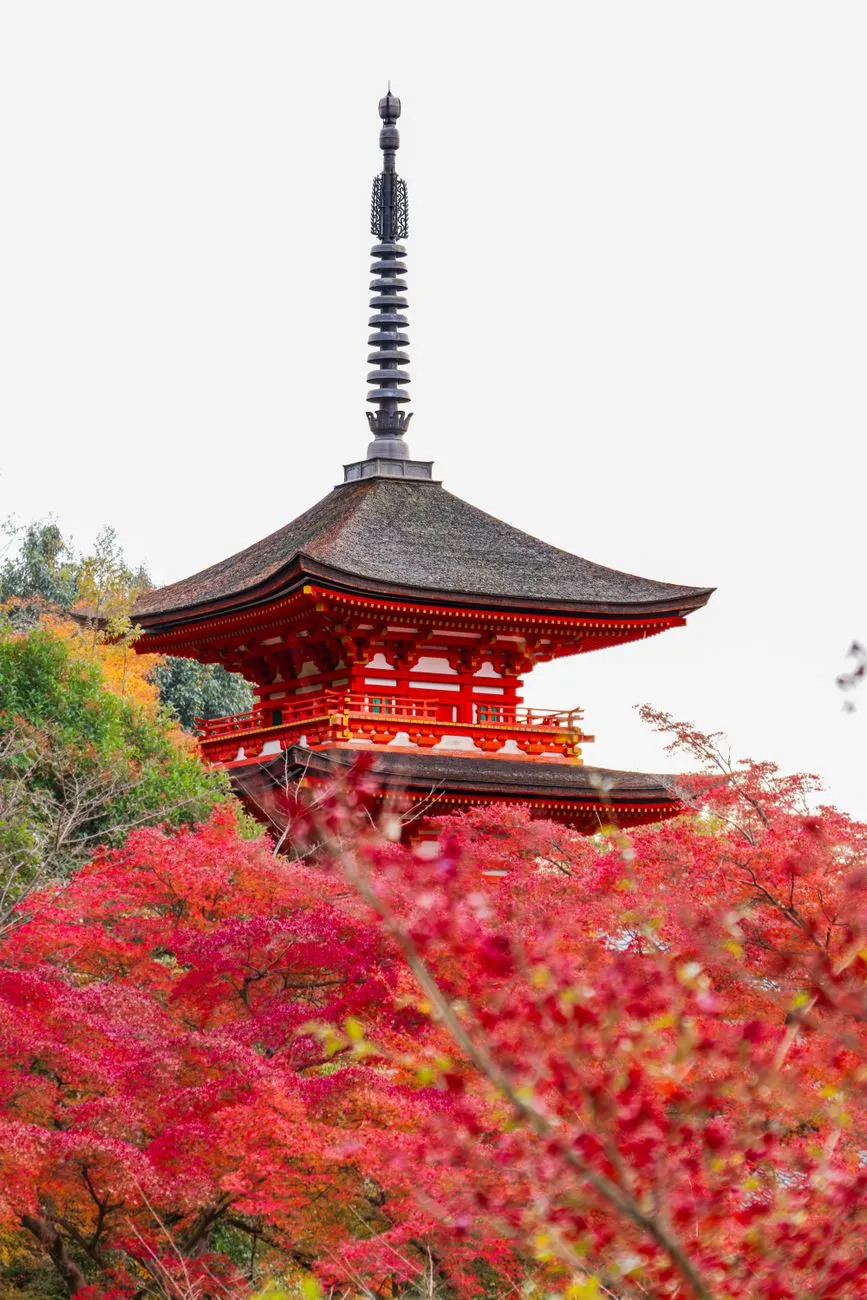
Travel info
Autumn Koyo in Japan 2026 — When, Where and Tips
This guide contains affiliate links. If you book through them we earn a small commission, at no extra cost to you. Affiliate Disclosure
If cherry blossom is the symbol of spring, koyo — the colouring of autumn leaves — is the soul of the Japanese autumn. For weeks, Japanese maples and ginkgo trees paint mountains, temples and gardens in shades of blazing red, orange and gold. Unlike sakura, the autumn leaf season is longer (one to two months in each region) and less crowded and expensive — making it an excellent time to visit.
This guide explains when the leaves arrive, where to see the most spectacular scenery, and how to plan your trip. Worth combining with choosing the right season.
Our Recommendation
Kyoto is the undisputed capital of koyo — but also the most crowded destination during the season. Aim for mid-to-late November in Kyoto and Tokyo, and early October in the mountains and Hokkaido. Visit famous temples early in the morning or during special evening illuminations (light-up). Koyo is 30–40% cheaper than sakura, and just as beautiful.
What Is Koyo and Why It’s Special
Koyo means red leaves, and the tradition of going out to admire them is called momiji-gari — hunting for autumn leaves. Like hanami in spring, the Japanese head en masse to gardens, temples and mountains to enjoy the colours. Autumn is considered one of Japan’s most beautiful seasons, with clear cool air and blue skies. Kyoto’s temples, with red maples against wooden buildings, are perhaps the most iconic autumn scene in the country.
When Does Koyo Arrive in 2026
Unlike sakura moving south to north, koyo moves north to south and from high to low. It starts in Hokkaido and the Alps as early as late September–early October, reaches the Tokyo and Kyoto area in mid-to-late November (peak usually around 20–30 November), and reaches southern spots even in early December. In high mountains like Nikko and Kamikochi, the peak is much earlier — October. Dates depend on weather: a cold, sudden autumn intensifies the colours.
The Best Spots in Kyoto
Kyoto shines in autumn: Tofuku-ji Temple with its viewing bridge above a sea of maples; Eikando and Kiyomizu-dera with spectacular evening illuminations; and Arashiyama in shades of orange and red. Many temples open in the evening for special light-ups. Book ahead and arrive early — these are the most crowded destinations, and hotels in Kyoto for the autumn season fill up months out.
The Best Spots in Tokyo and Surroundings
Tokyo and its surroundings also offer stunning autumn scenery: the golden ginkgo avenue at Meiji Jingu Gaien; Rikugien and Shinjuku Gyoen gardens; and day trips to Nikko (gilded temples in a red forest) and Hakone. The ginkgo avenue at Icho Namiki is one of the most photographed spots in the city.
The Alps and Nature Destinations
For nature lovers, the mountains offer the earliest and most dramatic koyo. Kamikochi and the Japanese Alps blaze with colour in October. Nikko and Lake Chuzenji are spectacular. Takayama and the Alps are an excellent base for autumn nature walks — here the colours arrive weeks before the cities.
Tree Types — Maple and Ginkgo
The two trees responsible for the magic are momiji (Japanese maple) with its star-shaped leaves turning vivid red, and icho (ginkgo) with its fan-shaped leaves turning brilliant gold. Ginkgo trees, ancient and tall, create breathtaking golden avenues in cities. The combination of red and gold against a backdrop of green pines is the signature of the Japanese autumn landscape.
Momiji-Gari and Evening Illuminations
Momiji-gari is a social ritual. Families and friends walk temple paths, take photos and rest in tea houses with a view. In the evening, many temples and gardens hold light-ups (special illuminations) that make the leaves glow against the dark — a magical experience worth planning in advance; evening illumination tours in Kyoto save queueing for tickets on the night. Check which venues are open in the evening, as not all are.
Autumn Seasonal Food
Autumn is also the best food season in Japan: matsutake (fragrant premium mushrooms), roasted Japanese sweet potato, chestnuts, pears, and of course hot dishes like nabe (simmering pot). Street stalls sell baked sweet potatoes and roasted chestnuts. Restaurant seasonal menus fill with fresh autumn ingredients.
Weather and What to Pack
Autumn is pleasant but changeable — pack layers. Mornings and evenings are cool (10–15°C) and midday is comfortable. In the mountains it is much colder. Rain is possible, so bring an umbrella. Book accommodation in advance for peak season in Kyoto, and visit popular spots early in the morning.
Koyo vs Sakura — Which Is Better
Both are spectacular, but autumn has practical advantages: a longer time window, fewer crowds, and prices 30–40% lower. Sakura is emotional and festive; koyo is calm, colourful and rich. If you’re flexible on dates and want fewer crowds — autumn is the smart choice. See the 7-day itinerary for how to combine them.
Quick Koyo Route
If you only have a few days during the autumn season, a classic route: two days in Kyoto (Tofuku-ji, Arashiyama and evening light-up at Eikando), one day in Nara or Osaka, and one day trip to a mountain area. Combine transport with the JR Pass and book central accommodation.
From here: read the Sakura guide for the spring alternative, compare with the seasons guide, plan with the 7-day itinerary, or go back to the Japan travel guide.
Frequently asked questions
When does autumn koyo peak in Kyoto?
Usually late November, around 20–30 November. There's a variation of one to two weeks between years.
Is koyo cheaper than sakura season?
Yes — accommodation and flight prices are 30–40% lower on average, and crowds are smaller.
Where do you see the leaves earliest?
In the mountains and Hokkaido (October), then in central cities (November).
Is it worth planning an evening illumination (light-up)?
Absolutely — the light-up at Kyoto's temples is a unique experience, but check opening times and plan ahead as not all temples are open in the evening.
Related guides
Japan: The Complete Guide for First-Time Visitors
Everything you need to know before flying to Japan: visa, transport, money, food, accommodation, and itineraries — the opening guide to our Japan series.
Japan Cherry Blossom (Sakura) Guide — When, Where and How to Plan
Complete guide to cherry blossom season in Japan: bloom calendar, forecast tips, best spots in Tokyo and Kyoto, hanami picnics, seasonal food, and planning advice.
When to Visit Japan — Month-by-Month Season Guide
When to fly to Japan? Complete guide to all seasons: spring, summer, autumn and winter, month-by-month weather, cheap vs. busy seasons, and holidays to avoid.